The embroidery design library
Everything about machine embroidery designs
Learn what an embroidery design file is, which format your machine needs, how designs are digitized and how to stitch them out beautifully. Clear, practical and in one place.




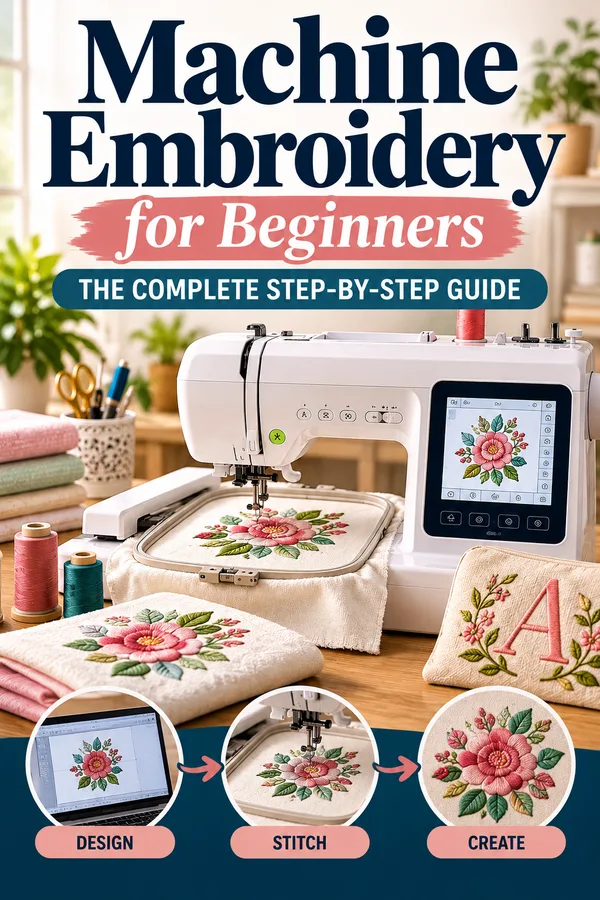
Featured ebook
Machine Embroidery for BeginnersThe Complete Step-by-Step Guide
Learn machine embroidery from zero: choose your machine and supplies, load designs, hoop and stabilize any fabric, and stitch clean, professional-looking projects with confidence.
- Pick the right machine, thread and needles
- Hoop and stabilize any fabric
- Load and stitch your first design
- Fix puckering, gaps and thread breaks
Instant digital download. Secure checkout by Hotmart.
Start here
What is an embroidery design?
What is inside an embroidery file, how a machine reads it, and why stitch files and working files are different.
Embroidery file formats
DST, PES, JEF, EXP, VP3, HUS and 15 more formats explained, with brands, colors and pitfalls.
Which format for my machine?
A brand-by-brand table of the formats home and commercial machines read.
How designs are digitized
Stitch types, density, underlay and pull compensation: what makes a design stitch well.
The six formats you will meet most
All formats →The closest thing embroidery has to a universal format. Created by Tajima for its commercial machines, DST is read by almost every embroidery machine and program in the world.
The native format of Brother and Baby Lock home and semi-commercial machines, and one of the most popular formats among hobby embroiderers.
The native format of Janome embroidery machines since the early 2000s, also used by Elna machines built by Janome.
A compact stitch format from Melco that is also the standard machine format for Bernina embroidery systems.
The current shared format of Husqvarna Viking and Pfaff, written by their 5D, 6D, Premier+ and mySewnet software.
The classic Husqvarna Viking machine format, still read by many Viking machines and widely offered by design sellers.
Practical guides
Hoops, stabilizers, thread and needles
Choose the right hoop size, stabilizer, thread and needle for every fabric.
From file to fabric
Pick the right file, load it onto your machine and stitch it out step by step.
Converting between formats
What survives a conversion, what gets lost, and which software to use.
Buying designs and licensing
How to buy designs safely and what personal and commercial licenses allow.
Troubleshooting
Fix puckering, gaps, thread breaks, birdnesting and files that will not load.
The precision most formats use for stitch coordinates.
The longest single move a DST stitch can make; longer moves become jumps.
The standard embroidery thread weight for most designs.